
Research
Regulation in the Bioeconomy. The research is divided into six focal areas. With an interdisciplinary approach, we provide scientific insights that support policymakers, industry, and society in addressing current and future challenges in life science regulation.
.
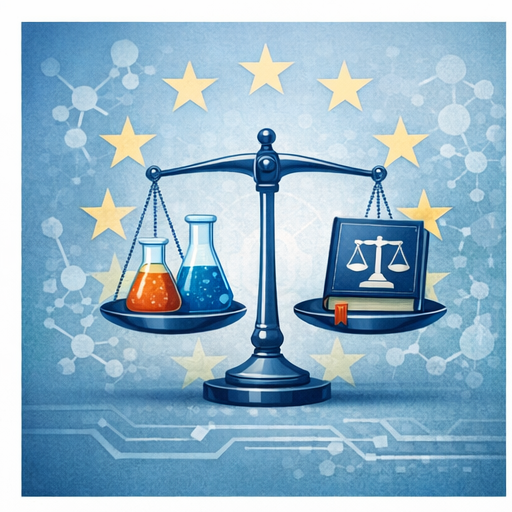
INNOVATE - Regulation of Biotechnology Innovations in Life Sciences Law
Transforming food production is essential to ensure competitiveness, food safety, security, and environmental sustainability while achieving the UN Sustainable Development Goals. In the EU, the main frameworks regulating food innovation are the GMO Directive (2001/18/EC) and the Novel Food Regulation (EU 2015/2283). Although regulation can foster innovation, its complexity and rigidity often hinder technological progress. Both regimes aim to balance innovation with societal acceptance but are widely seen as needing reform. Innovation across value chains is driven by changing consumer preferences for functional, and sustainable products. Advances in molecular genetics, particularly CRISPR/Cas gene editing, have expanded possibilities for efficient, high-quality crop breeding. However, strict EU procedures for novel foods and GMO approval, requiring EFSA risk assessments, extensive labelling, and costly authorizations, pose significant barriers to market entry. Scholarly debate highlights the challenge of regulating innovation responsibly. Legal frameworks must protect consumers while enabling progress. Concepts like “legal disruption” explore how rapid technological change challenges existing laws. Overall, interdisciplinary collaboration and design-oriented regulatory reform are essential to align innovation with public trust and sustainability goals.
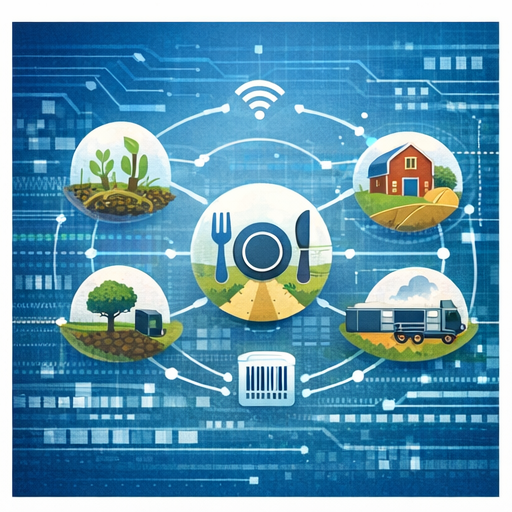
BIOGOV - Regulation in the Age of Bioplatforms
The analysis of biological data through artificial intelligence, combined with the potential of biological platforms, offers unprecedented opportunities. Using these technologies, a viable SARS-CoV-2 vaccine was designed just 48 hours after decoding the genome. However, due to regulatory requirements, market approval took over a year—time in which the virus continued to spread. Google seeks to drastically shorten drug development using AI-driven bioplatforms, potentially achieving immense scalability. Both cases raise crucial questions about appropriate regulation of AI-based biotechnology. The COVID-19 vaccine authorization process was relatively fast because environmental assessments were waived and long-delayed procedural reforms were implemented. In contrast, new AI-driven drug development faces regulatory barriers that slow market introduction. When once “indispensable” authorization steps can be bypassed in emergencies, yet normal approvals still take years, the adequacy of current pharmaceutical regulation must be questioned—especially given that access to health data (“data sovereignty”) and efficient market entry are central to the bio-platform economy. Beyond pharmaceuticals, technologies such as precision fermentation in food production and Engineered Living Materials (ELMs), like living cement, also depend on data availability and streamlined market access. These represent “data sovereignty” and “market access” barriers. Thus, research must explore how bioplatforms can be regulated to ensure Europe’s data and technology sovereignty while enabling responsible innovation, consumer protection, and fair market opportunities.
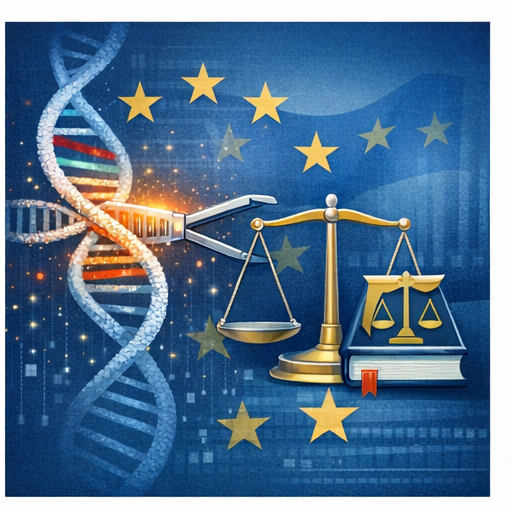
SUPPLY - Regulation of Food Supply Chains - Competitive and Sustainable
The scholarly literature widely acknowledges that agri-food value chains assume a central role in the attainment of sustainability objectives. These value chains are, in their very essence, regulated through contractual arrangements. Contractual arrangements have in recent years gained remarkable prominence as regulative tools and have been expressly embedded within several legislative instruments of the European Union (EU). In the agri-food sector, existing regulatory targets of contractual regulation, as well as their analytical frameworks, however, predominantly emerge from public-law reasoning and Western paradigms. As such, they frequently fail to capture market realities and the heterogeneity of socio-economic contexts in which supply chains operate. This research line conceptualises contractual supply chain regulation empirically and investigates better designs of such supply chains. It also assesses the effects of the EU's turn to supply chain regulation.
BEHAVE - Behavioural Foundations of EU Economic Law
Food is a universally consumed commodity, and its purchase represents an interaction between individual experience and the surrounding information environment. Even during crises like the pandemic, food trade continues because it is essential for survival. This research focuses on the spontaneous moment of food purchase - a point of vulnerability and decision-making asymmetry for consumers faced with overwhelming product choices. Studies show that such choices are made with minimal effort and are driven by heuristics and unconscious processes.
Technological advances, evolving shopping habits, and the emergence of novel foods are reshaping the consumer experience, amid pressures to consume sustainably. Since food purchasing directly influences food intake, these decisions have major health and economic consequences, contributing to obesity, diabetes, and other non-communicable diseases. The EU’s €1.1 trillion food and drink market also carries immense commercial stakes.
This project explores the gap between real consumer behaviour and normative expectations under EU food labelling law (Regulation (EU) No 1169/2011). It asks whether courts assessing misleading labels should rely on empirical evidence of consumer behaviour or maintain a strictly legal interpretation. Ultimately, it seeks to develop an interdisciplinary, behaviourally informed framework for judicial decision-making in food labelling cases.
CONSOLIDATE - Doctrinal Analysis of Food Law as an Interdisciplinary Field of Law
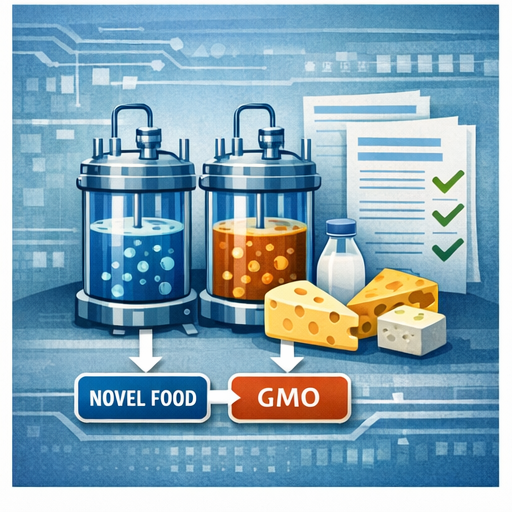
The CONSOLIDATE line investigates food law as an emerging interdisciplinary field situated at the intersection of law, science, and society. Food law governs every stage of the food chain—from production and processing to labelling and consumption—and increasingly integrates elements of health law, environmental law, consumer protection, trade, and technology regulation. Yet, despite its growing significance, food law remains fragmented across these disciplines, lacking a coherent doctrinal foundation. This project seeks to consolidate the field by developing a unified theoretical and methodological framework for its study.
Through doctrinal legal analysis combined with insights from behavioural science, public health, and economics, CONSOLIDATE examines how legal norms, scientific evidence, and policy objectives interact within European and international food law. It explores how regulatory regimes balance innovation, sustainability, and consumer protection while ensuring food safety and security. Special attention is given to the role of law in addressing challenges posed by novel foods, biotechnology, and digitalisation in the agri-food sector.
The project aims to define the doctrinal boundaries of food law, clarify its guiding principles, and establish it as a distinct and interdisciplinary field of legal research. Ultimately, CONSOLIDATE will provide conceptual tools for scholars, policymakers, and practitioners to design coherent, innovation-friendly, and socially responsive food regulation.
BREBUT - Our Bread and Butter domain
Each researcher has a classical disciplinary area to nourish. We focus on EU and international economic law, as well as national legal systems.